Of the 524 firms on our 92 city lists in the United States, Schochor, Staton, Goldberg, and Cardea, P.A. scores highest on malpractice focus, published results, client reviews and experience, followed by Hastings Law Firm and The Law Offices of Dr. Michael M. Wilson MD, JD & Associates. Each firm keeps its best score from the cities it serves; open a city for its full list.
Best Lung Cancer Misdiagnosis Lawyers in the United States
Feature your firm first on this page
This spot goes to one firm for a year. It's shown first, above everyone below, and labeled Featured.
4.8181 Google reviewsRated 4.8 out of 5 on Google from 181 reviews
Best for: Birth injury and hospital negligence
In its published cases, Schochor, Staton, Goldberg, and Cardea, P.A. describes oxygen deprivation during delivery and Erb’s palsy; it also publishes verdicts involving deaths after hospital care.
We order firms by how much of their work is medical malpractice, the results they publish, what their clients say, their experience, their standing with the regulator and the recognition they have earned, all from public records and the firms' own sites. How lists are made
4.6102 Google reviewsRated 4.6 out of 5 on Google from 102 reviews
Best for: Misdiagnosis and surgical injury claims
Among Hastings Law Firm's published results are a $19,750,000 failure-to-diagnose settlement and a $10,700,000 negligent-prescribing jury verdict. Because it focuses on malpractice and publishes those results, it tops this list.
We order firms by how much of their work is medical malpractice, the results they publish, what their clients say, their experience, their standing with the regulator and the recognition they have earned, all from public records and the firms' own sites. How lists are made
5.0216 Google reviewsRated 5.0 out of 5 on Google from 216 reviews
Best for: Delayed diagnosis and anesthesia injuries
An alleged delayed diagnosis of HSV encephalitis is behind the $11.65 million result published by The Law Offices of Dr. Michael M. Wilson MD, JD & Associates. For negligent anesthesia care, it reports another result of $8 million.
We order firms by how much of their work is medical malpractice, the results they publish, what their clients say, their experience, their standing with the regulator and the recognition they have earned, all from public records and the firms' own sites. How lists are made
4.724 Google reviewsRated 4.7 out of 5 on Google from 24 reviews
Best for: Misdiagnosis and surgical injury claims
A $12 million misdiagnosis result stands out among the cases published by The Law Offices of Cardaro & Peek, LLC. For negligent surgery, it lists a $7.9 million result; for breast cancer misdiagnosis, it lists $7.1 million.
We order firms by how much of their work is medical malpractice, the results they publish, what their clients say, their experience, their standing with the regulator and the recognition they have earned, all from public records and the firms' own sites. How lists are made
4.7226 Google reviewsRated 4.7 out of 5 on Google from 226 reviews
Best for: Birth injury and delayed diagnosis
Among Wapner Newman Attorneys At Law's listed results are $8.4 million for brain injury after a delayed diagnosis and $7 million for birth trauma causing brain damage.
We order firms by how much of their work is medical malpractice, the results they publish, what their clients say, their experience, their standing with the regulator and the recognition they have earned, all from public records and the firms' own sites. How lists are made
Lung cancer misdiagnosis lawyers by state
The rules change from one state to the next, so the lawyers near you are the ones to call.
A missed lung cancer diagnosis may need a malpractice review if an avoidable error held up treatment and caused more harm. The later diagnosis doesn't prove malpractice. Check the earlier chest images first; the records should explain why the care team believed something other than cancer was causing the symptoms. A lawyer in your state can explain how its rules apply.
You aren't the only person wondering whether an earlier visit has something to do with your current diagnosis. What did the care team know at that visit? What should the team have done with the information available to them? The review needs to examine that earlier care, so asking these questions helps avoid assuming someone made a mistake just because cancer was diagnosed later.
What lung cancer misdiagnosis means
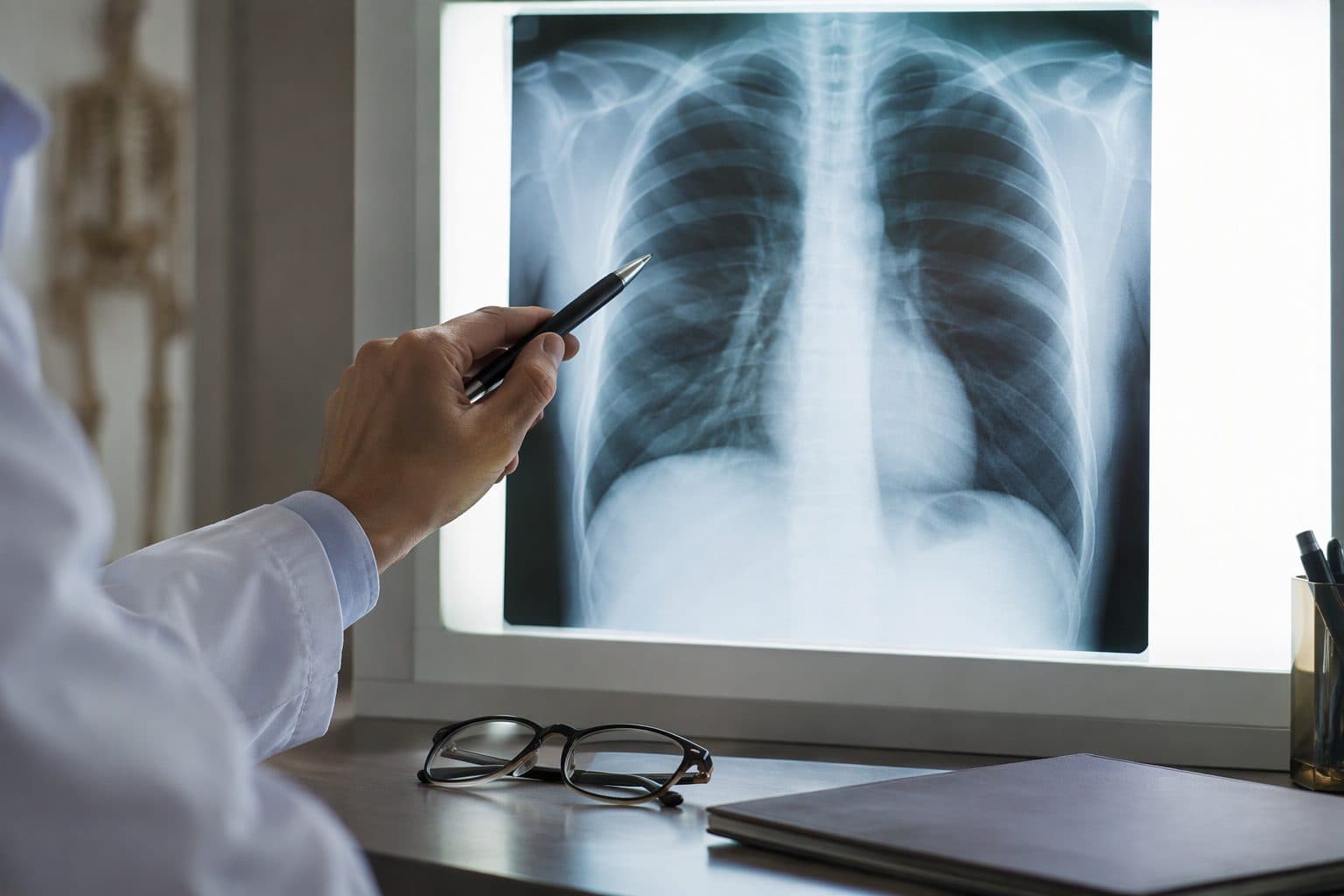
Lung cancer is misdiagnosed when the cancer in the lung isn't correctly identified. Chest imaging may not have picked up the cancer; another concern is that it was mistaken for an infection and spread before treatment started. “Delayed diagnosis” describes the wait until cancer is diagnosed after an earlier opportunity to identify it was missed.
These descriptions don't always mean the same thing in every case. Reviewing a wrong explanation for someone's symptoms isn't the same as reviewing an imaging finding that was written down but never followed up. Your records can help you see what needs a closer look.
The Misdiagnosis & Delayed Diagnosis page discusses diagnostic errors more broadly, beyond those involving lung cancer. This review starts by examining the earlier lung-related care, with a question about the delay: did it change what happened to the patient?
How cancer can be mistaken for another condition
Nass Cancelliere's discussion of lung cancer misdiagnosis explains that lung cancer symptoms can look like symptoms of other conditions, such as asthma or pneumonia. A reviewer needs to look at how the diagnosis was made because those symptoms overlap. That overlap doesn't mean either condition received the wrong treatment.
Symptoms shared by pneumonia and lung cancer also appear in Patient Power's discussion. It points out something important here: when people have lung cancer, pneumonia can develop as a complication. Having one diagnosis doesn't necessarily rule out the other.
Start a case review with the reasons for the first diagnosis, not with what you know happened later. Read the earlier chart, too. A pneumonia entry needs to be read alongside the later cancer diagnosis; the reviewer shouldn't assume that the first diagnosis was false just because cancer was found afterward.
Warning signs to discuss with your care team
Nass Cancelliere and Patient Power discuss symptoms these conditions share, but neither offers a checklist you can use to distinguish lung cancer from infection. This page can't tell you which of those conditions you have. When you speak with your treating clinician, describe what's changed and ask what the current diagnosis explains.
Ask what the chest imaging actually showed, rather than relying on a remembered description like “it looked fine.”
Ask your care team what comes next if symptoms haven't resolved, including whether the original explanation still makes sense.
Ask who can explain a finding you don't understand in the report, including whether you'll need follow-up.
Your treating team can discuss the earlier records with you during cancer care; ask what those records can and can't tell you.
These questions can help you start talking with your team, but they won't provide a diagnosis. The medical care you're getting now doesn't answer the separate question of whether someone was negligent in your earlier care.
What one study says about mistaken tuberculosis diagnoses
Researchers describe patients whose lung cancer had been mistaken for pulmonary tuberculosis (TB) in a Journal of Thoracic Oncology study summary. Their treatment lasted more than a month, according to the same summary. Those figures describe the study's patients, not anyone outside that group. How often lung cancer is misdiagnosed across the United States isn't something you can learn from those figures.
Lung cancer patients in the study reported as previously misdiagnosed with pulmonary TB
The study offers a look at how a diagnosis gets delayed. It doesn't show what happened in your care, including whether a particular clinician failed to meet the standard of care. Whether an earlier diagnosis would have changed your treatment is another question the study can't answer.
A finding can be recorded without being followed up
Reading an image isn't the last step; someone still needs to act on what it shows. Describing their experience in r/Radiology, an anonymous commenter cited a lack of follow-up after incidental findings as a reason lung cancers were missed.
This is one person's account, not a way to measure rates or judge what happened in your care. You can use it to frame a question about your records: what happened after someone noted a finding in an earlier report? Check the records for what happened to any written recommendation, including whether anyone carried it out.
The report alone isn't enough to tell you who was responsible. Read the report alongside your visit notes and messages before reaching a conclusion; the lawyer reviewing your care can tell you what else they need.
When a missed diagnosis may be malpractice
A lawyer reviewing possible malpractice needs to examine the diagnostic mistake, then look separately at what it caused. Was the required standard met by the care you received? If the care fell short, did that cause injury, and what additional harm did you suffer? A lawyer in your state can explain the legal requirements that apply.
The standard of care: what should have happened then?
Start by checking what the care team had to work with at the earlier visit. Given what the image showed, what explanation did the clinician put in the chart? Did anyone act on the recommendation for follow-up, and how?
Ask the lawyer what medical review they'll need to assess those questions against the applicable standard of care, including how that assessment would be made. The later diagnosis gives you a reason to ask, but it doesn't answer those questions.
Causation: did the delay change the outcome?
After that, the reviewer asks what difference the alleged error made. Once the reviewer examines when the cancer could have been identified, they consider whether diagnosing it then would have changed treatment or prevented some of the harm that followed.
Even if cancer spread after an earlier visit, that alone doesn't prove causation. When you review the records, ask what they show about the time between visits. To address causation separately, the reviewer needs to explain how the delay connects to the claimed injury.
Harm: what is being attributed to the delay?
When you speak with the lawyer, explain which harm concerns you. Perhaps you believe treatment options wouldn't have changed if the cancer had been diagnosed earlier. If additional treatment or suffering during the delay concerns you instead, say so. To support those concerns, bring the relevant records.
What to do next
Before you request a review, you don't have to resolve the medical or legal questions. As you describe what happened, be accurate about what's recorded in the chart and keep that separate from what you remember being told.
Prepare for an initial case review
1
Gather the earlier imaging
When requesting chest images and written reports, include the imaging that led to the cancer diagnosis. Point out to the lawyer which examinations concern you.
2
Collect the surrounding records
When you request visit notes explaining the earlier diagnosis, also ask for follow-up instructions and messages about the imaging. If something is missing, mark it that way rather than fill the gap with your memory.
3
Build a dated account
After recording the earlier visit date and the cancer diagnosis date, add any care between them that you can document. If a date isn't certain, say so.
4
Describe the suspected harm
If you believe the delay changed something, describe what changed. While you can point to records that might address it, don't try to reach a medical conclusion yourself.
5
Speak with a lawyer in your state
When you ask about the filing deadline, find out what the lawyer needs to review the claim. Even with records still missing, bring your timeline.
If hospital care concerns you, you may find help framing your questions on the Hospital & Nursing Negligence page. For a disputed diagnosis from an emergency visit, see Emergency Room Errors. Knowing where the care happened doesn't, by itself, establish who was responsible.
Deadlines differ by state
When you can file a medical malpractice claim depends on the state. Because those deadlines differ, this page doesn't provide one statute of limitations for lung cancer misdiagnosis. To find the relevant state, visit the state pages. Once you've found it, ask a lawyer there how the rules apply to your dates.
Receiving the cancer diagnosis doesn't necessarily mean that's when the clock starts. When you speak with the lawyer, give the date of the earlier care and explain when you learned a diagnosis might have been missed. Which dates count is something to ask under your state's rules.
Make the first conversation useful
To start simply, you can say: “I was treated for an infection after this chest image, and lung cancer was diagnosed later. I'd like someone to review whether the earlier care caused a harmful delay.” If your records say something different, adjust that description to fit them.
What remains uncertain is worth asking about. If the earlier image raises a question, or someone may have mishandled follow-up, ask about that. How the delay affected you medically may need review too. By keeping those questions separate, you can understand what the lawyer is proposing to examine.
Although this page provides general information, it isn't legal advice. Along with your records, your state's rules matter. To understand how those rules apply to the suspected delay, talk with a lawyer in your state.
Yes, pneumonia is a condition that can be confused with lung cancer, according to Nass Cancelliere. In describing overlapping symptoms, Patient Power also says pneumonia may develop as a complication in people who have lung cancer. Having both diagnoses is possible. Before treating a pneumonia diagnosis as evidence that someone negligently missed cancer, a review must look at what supported that diagnosis and what happened next.
Can lung cancer be missed on chest imaging?
If lung cancer may have been missed on chest imaging, this page addresses that concern. When you think that's happened to you, ask for the original images and written reports. Don't treat the later diagnosis as proof. Because it doesn't show that the earlier image should have led to a cancer diagnosis, ask a lawyer what medical review would be needed to assess that earlier finding.
Does a delayed lung cancer diagnosis mean I have a malpractice case?
Not by itself: before examining whether a departure caused additional harm, a review must determine whether the earlier care fell below the applicable standard. Although the later cancer diagnosis gives you reason to ask questions, it doesn't establish negligence. To find out which records are needed and how the legal requirements apply to your circumstances, speak with a lawyer in your state.
What records should I gather for a lung cancer misdiagnosis review?
To get started, gather the earlier chest images and reports. When you collect the visit notes explaining the diagnosis then, include any follow-up instructions or messages you have. Add the records showing the later cancer diagnosis. As you write your timeline, clearly mark uncertain dates; rather than wait to make the first call because records are missing, tell the lawyer what you've requested.
How long do I have to file a lung cancer misdiagnosis claim?
Which state applies affects the deadline. Because this page doesn't set a deadline for your claim, check the state pages and speak with a lawyer in the relevant state. When you talk, give the dates of the earlier care and later diagnosis. While you're waiting for records, don't assume you can postpone asking about timing or that the diagnosis starts the clock.



 1